
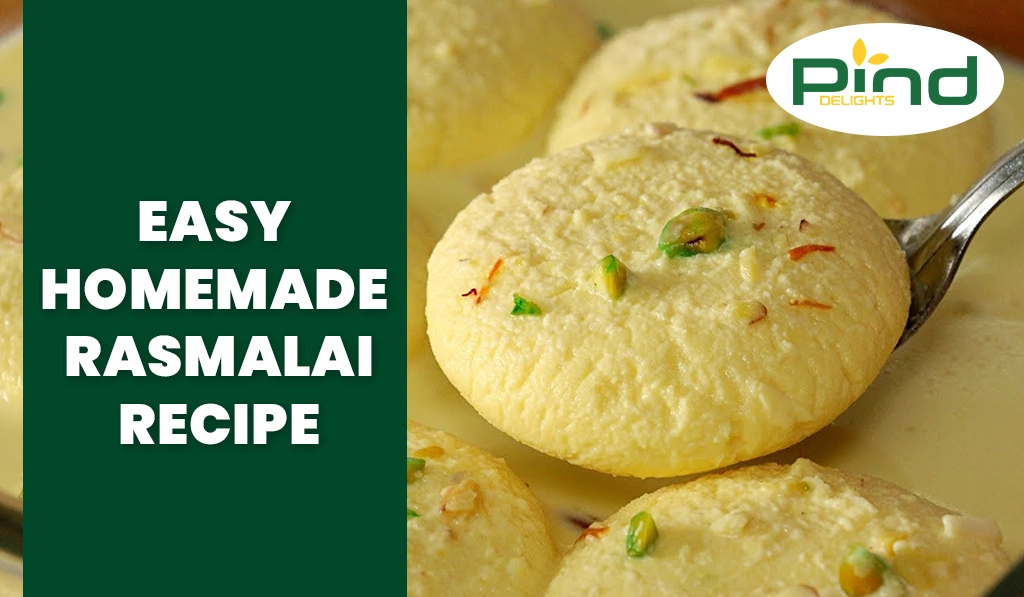
Rasmalai is one of the most loved Indian desserts, known for its soft, spongy texture and rich, creamy milk flavoured with cardamom, saffron, and nuts. Whether you are preparing dessert for a family dinner, Diwali celebration, birthday, wedding gathering, or simply craving something sweet, homemade Rasmalai is a wonderful choice.
For Indian families living in Australia, Rasmalai is also a comforting reminder of traditional celebrations and festive occasions back home. The good news is that you can easily prepare authentic Rasmalai at home using ingredients commonly available at Australian supermarkets and Indian grocery stores.
This easy homemade Rasmalai recipe step by step will guide you through everything you need to know, from preparing fresh chenna to cooking soft Rasmalai balls and making rich saffron-flavoured milk.
What Is Rasmalai?
Rasmalai is a traditional Indian milk-based dessert made using fresh chenna, which is prepared by curdling milk and separating the milk solids from the whey. The chenna is kneaded until smooth, shaped into small discs, and cooked in sugar syrup.
These soft discs are then soaked in a thickened, sweetened milk known as rabri or ras.
The milk is usually flavoured with:
- Cardamom
- Saffron
- Pistachios
- Almonds
- Rose water, if preferred
The result is a soft, juicy, creamy dessert that tastes best when served chilled.
Why Make Rasmalai at Home?
Making Rasmalai at home may seem complicated at first, but once you understand the basic process, it becomes much easier.
Homemade Rasmalai allows you to control the sweetness, milk quality, flavour, and texture according to your preference.
You can also make it fresher than many packaged alternatives.
Another advantage for people living in Australia is that the recipe does not require unusual equipment. Most ingredients can be found easily in supermarkets such as Coles or Woolworths, while saffron, cardamom, and pistachios are widely available at Indian and South Asian grocery stores.
Ingredients for Homemade Rasmalai
This recipe makes approximately 10 to 12 Rasmalai pieces, depending on the size.
For Making Chenna
- 1 litre full-cream milk
- 2 to 3 tablespoons lemon juice or white vinegar
- 2 tablespoons water for diluting the lemon juice
- Cold water for rinsing
Using full-cream milk is recommended because it produces softer and richer chenna.
In Australia, regular full-cream cow’s milk works well for this recipe.
For the Sugar Syrup
You will need:
- 1 cup sugar
- 4 cups water
The syrup should remain light rather than becoming thick because the Rasmalai discs need enough liquid to expand while cooking.
For Rasmalai Milk or Rabri
You will need:
- 1 litre full-cream milk
- 4 to 5 tablespoons sugar, or according to taste
- 8 to 10 saffron strands
- ½ teaspoon cardamom powder
- 2 tablespoons sliced pistachios
- 2 tablespoons sliced almonds
Optional ingredients include:
- 1 teaspoon rose water
- A few dried rose petals for garnish
Equipment You Will Need
You do not need any specialised kitchen equipment.
Keep the following ready:
- Heavy-bottomed saucepan
- Large pot with lid
- Muslin cloth or clean cotton cloth
- Strainer
- Mixing bowl
- Plate
- Spoon or spatula
A heavy-bottomed saucepan is particularly useful when preparing the reduced milk because it helps prevent the milk from burning.
How to Make Rasmalai Step by Step
Step 1: Boil the Milk
Pour 1 litre of full-cream milk into a large saucepan.
Heat the milk over medium heat and bring it to a gentle boil.
Stir occasionally so that the milk does not stick to the bottom.
Once it comes to a boil, reduce the heat slightly.
Step 2: Curdle the Milk
Mix the lemon juice with approximately 2 tablespoons of water.
Slowly add the diluted lemon juice to the hot milk while gently stirring.
After a few moments, the milk will begin separating into:
- Soft white milk solids
- Light greenish whey
Once the milk has completely separated, stop adding lemon juice.
Avoid adding too much acid because it may make the chenna hard.
Step 3: Strain the Chenna
Place a muslin cloth over a large strainer.
Carefully pour the curdled milk through the cloth.
The whey will drain away while the chenna remains inside the cloth.
Immediately rinse the chenna under cold running water.
This step is important because it removes the sour flavour of lemon juice or vinegar.
Step 4: Drain Excess Water
Gather the muslin cloth around the chenna and gently squeeze out excess water.
Do not squeeze too aggressively.
Hang the cloth for approximately 30 to 40 minutes so that excess water can naturally drain.
The chenna should remain slightly moist.
If it becomes too dry, your Rasmalai may turn hard.
Step 5: Knead the Chenna
Transfer the drained chenna onto a clean plate.
Using the heel of your palm, gently knead the chenna for approximately 8 to 10 minutes.
Continue kneading until it becomes:
- Smooth
- Soft
- Lump-free
- Easy to shape
This is one of the most important steps when making Rasmalai.
Properly kneaded chenna produces soft and smooth Rasmalai pieces.
Step 6: Shape the Rasmalai Discs
Divide the kneaded chenna into equal portions.
Roll each portion gently between your palms to create a smooth ball.
Flatten each ball slightly into a small disc.
Do not make the discs too large because they will expand while cooking.
Make sure there are no major cracks around the edges.
Step 7: Prepare the Sugar Syrup
Add:
- 1 cup sugar
- 4 cups water
to a large pot.
Bring the mixture to a rolling boil.
The sugar should completely dissolve.
Do not cook the syrup until thick.
Rasmalai requires a light sugar syrup so the chenna pieces can expand properly.
Step 8: Cook the Rasmalai Discs
Once the sugar syrup is boiling, gently add the chenna discs one by one.
Leave enough space between the pieces because they will increase in size.
Cover the pot with a lid.
Cook over medium-high heat for approximately 12 to 15 minutes.
During this time, the discs should become noticeably larger and softer.
Avoid repeatedly opening the lid because the steam helps cook the chenna properly.
Step 9: Check the Texture
After approximately 15 minutes, remove the lid.
The Rasmalai pieces should appear:
- Light
- Soft
- Puffy
- Spongy
Remove the pot from the heat.
Allow the pieces to cool slightly inside the syrup.
Do not transfer hot Rasmalai directly into cold milk.
How to Make Rasmalai Milk
While the chenna discs are cooling, prepare the creamy milk.
Step 10: Boil the Milk
Pour 1 litre of full-cream milk into a heavy-bottomed saucepan.
Bring the milk to a boil over medium heat.
Once boiling, reduce the heat.
Continue simmering gently.
Stir frequently to prevent the milk from sticking or burning.
Step 11: Reduce the Milk
Allow the milk to simmer for approximately 20 to 30 minutes.
The milk should reduce slightly and become creamier.
For Rasmalai, you generally do not need extremely thick rabri.
The milk should remain fluid enough for the Rasmalai discs to absorb it.
Step 12: Add Saffron
Place saffron strands in approximately 2 tablespoons of warm milk.
Allow them to soak for a few minutes.
Then add the saffron milk to the saucepan.
This gives the Rasmalai its beautiful colour and delicate aroma.
Step 13: Add Sugar and Cardamom
Add:
- Sugar
- Cardamom powder
Stir gently until the sugar dissolves completely.
Taste the milk before adding additional sugar.
Remember that the chenna discs have already been cooked in sugar syrup, so the milk does not need to be overly sweet.
Step 14: Add Nuts
Add sliced almonds and pistachios.
You can keep a small quantity aside for final garnish.
Continue simmering for another 2 to 3 minutes.
Switch off the heat and allow the milk to cool until warm.
Step 15: Transfer Rasmalai to the Milk
Take one Rasmalai disc from the sugar syrup.
Place it gently between your palms or two spoons and press very lightly to remove excess syrup.
Do not squeeze hard because the Rasmalai may break.
Transfer the disc into the warm saffron milk.
Repeat with all remaining pieces.
Step 16: Allow the Rasmalai to Soak
Let the Rasmalai soak in the flavoured milk for at least 2 to 3 hours.
For the best flavour, refrigerate it for several hours or overnight.
As the Rasmalai rests, the discs absorb the creamy milk and become even softer.
How to Serve Rasmalai
Rasmalai is traditionally served chilled.
Place one or two Rasmalai pieces in a dessert bowl and spoon some of the saffron milk around them.
Garnish with:
- Sliced pistachios
- Almonds
- Saffron strands
- Dried rose petals
Serve immediately while chilled.
Tips for Making Soft Rasmalai
Getting soft Rasmalai depends on a few important details.
Use Full-Cream Milk
Full-cream milk gives the chenna a soft and rich texture.
Reduced-fat milk may produce slightly different results.
Do Not Over-Curdle the Milk
Once the milk separates completely, stop adding lemon juice or vinegar.
Too much acid can make the chenna firm.
Keep the Chenna Slightly Moist
Chenna that is too dry becomes difficult to knead and may create hard Rasmalai.
Knead Properly
Kneading is essential.
The chenna should become smooth before shaping.
Use Thin Sugar Syrup
Do not make thick sugar syrup.
The discs need plenty of water and steam to expand.
Cook in a Large Pot
Give the Rasmalai pieces enough room to expand.
Crowding the pot can affect their shape and texture.
Common Rasmalai Mistakes to Avoid
Rasmalai Becomes Hard
This may happen because:
- The chenna was too dry.
- It was not kneaded enough.
- The discs were overcooked.
- The milk used for chenna was unsuitable.
Rasmalai Breaks While Cooking
Possible reasons include:
- Chenna containing too much moisture.
- Insufficient kneading.
- Cracks in the shaped discs.
- Sugar syrup not boiling properly before adding the discs.
Rasmalai Does Not Expand
Make sure the sugar syrup is boiling when you add the discs.
The pot should also be large enough to allow proper circulation of steam.
Ingredient Alternatives in Australia
If you are making Rasmalai in Australia, most ingredients can be found easily.
Full-cream milk from major Australian supermarkets works well.
For Indian ingredients such as saffron, green cardamom, pistachios, and rose water, check:
- Indian grocery stores
- South Asian supermarkets
- Middle Eastern grocery stores
- Larger Australian supermarkets
For best results, use good-quality saffron because only a small quantity is required to provide both colour and aroma.
How Long Can Homemade Rasmalai Be Stored?
Because Rasmalai is made primarily with fresh milk, it should always be refrigerated.
Store it in an airtight container in the refrigerator.
Homemade Rasmalai is generally best enjoyed within 2 to 3 days.
Avoid leaving Rasmalai at room temperature for extended periods, particularly during warmer Australian weather.
Can You Make Rasmalai Ahead of Time?
Yes.
Rasmalai is actually an excellent make-ahead dessert because the flavour improves as the chenna discs absorb the saffron milk.
You can prepare it the evening before a celebration and refrigerate it overnight.
This makes it ideal for:
- Diwali gatherings
- Dinner parties
- Birthday celebrations
- Weddings
- Family functions
- Festive events
Frequently Asked Questions About Rasmalai
Is Rasmalai served hot or cold?
Rasmalai is traditionally served chilled.
Allowing it to rest in the refrigerator also helps the flavours develop.
Can I use vinegar instead of lemon juice?
Yes.
White vinegar can be used to curdle the milk.
Dilute it with some water before adding it gradually.
Why is my Rasmalai chewy?
Chewy Rasmalai can result from dry chenna, over-kneading, or overcooking.
Keep the chenna moist and cook the discs only until they become soft and expanded.
Can Rasmalai be made without saffron?
Yes.
Saffron provides a beautiful flavour and colour but is not absolutely necessary.
You can make delicious Rasmalai using cardamom and nuts alone.
Can I reduce the sugar?
Yes.
One of the advantages of making Rasmalai at home is that you can adjust the sugar according to your preference.
Reduce the sugar in the flavoured milk while keeping enough sugar in the cooking syrup for proper texture.
What is Rasmalai made of?
Rasmalai is made from soft chenna, or Indian cottage cheese, prepared by curdling milk. The chenna is shaped into small discs, cooked in sugar syrup, and then soaked in sweetened milk flavoured with cardamom, saffron, almonds, and pistachios.
What does Rasmalai taste like?
Rasmalai has a rich, creamy, and mildly sweet taste. The soft and spongy chenna absorbs the flavoured milk, while saffron, cardamom, and nuts add a delicate aroma and slightly nutty flavour.
What is Rasmalai?
Rasmalai is a traditional Indian dessert made from soft chenna discs soaked in thickened, sweetened milk. It is usually flavoured with saffron and cardamom and garnished with almonds and pistachios. Rasmalai is typically served chilled.
Is Rasmalai healthy or unhealthy?
Rasmalai contains milk and chenna, which provide protein and calcium, but it can also be high in sugar and calories. It is best enjoyed in moderation as an occasional dessert. Homemade Rasmalai can be made lighter by reducing the amount of added sugar.
Rasmalai: A Perfect Indian Dessert for Celebrations in Australia
Rasmalai has a special place in Indian celebrations because of its rich flavour, elegant appearance, and delicate texture.
For Indian families across Australia, preparing traditional sweets at home can make festivals and family gatherings feel even more special.
Whether you are celebrating Diwali in Melbourne, hosting friends in Sydney, organising a family gathering in Brisbane, or preparing dessert for guests anywhere else in Australia, homemade Rasmalai is an impressive dessert that can be enjoyed by people of all ages.
Its creamy texture and gentle flavours also make it a great Indian dessert to introduce to friends who may not have tried traditional mithai before.
Final Thoughts
Learning how to make easy homemade Rasmalai step by step is much simpler once you understand the three main stages:
- Preparing soft chenna
- Cooking the chenna discs in sugar syrup
- Soaking them in rich saffron and cardamom-flavoured milk
The secret to perfect Rasmalai is patience.
Keep the chenna slightly moist, knead it until smooth, cook the discs in properly boiling sugar syrup, and give them enough time to absorb the flavoured milk.
With fresh full-cream milk, aromatic saffron, cardamom, almonds, and pistachios, you can create soft, creamy, and delicious Rasmalai right in your own kitchen.
For anyone in Australia looking to enjoy the authentic taste of Indian sweets, this homemade Rasmalai recipe is a wonderful way to bring traditional Indian flavours to the table.
Serve it chilled, garnish generously with nuts, and enjoy a classic dessert that makes every occasion feel a little more special.